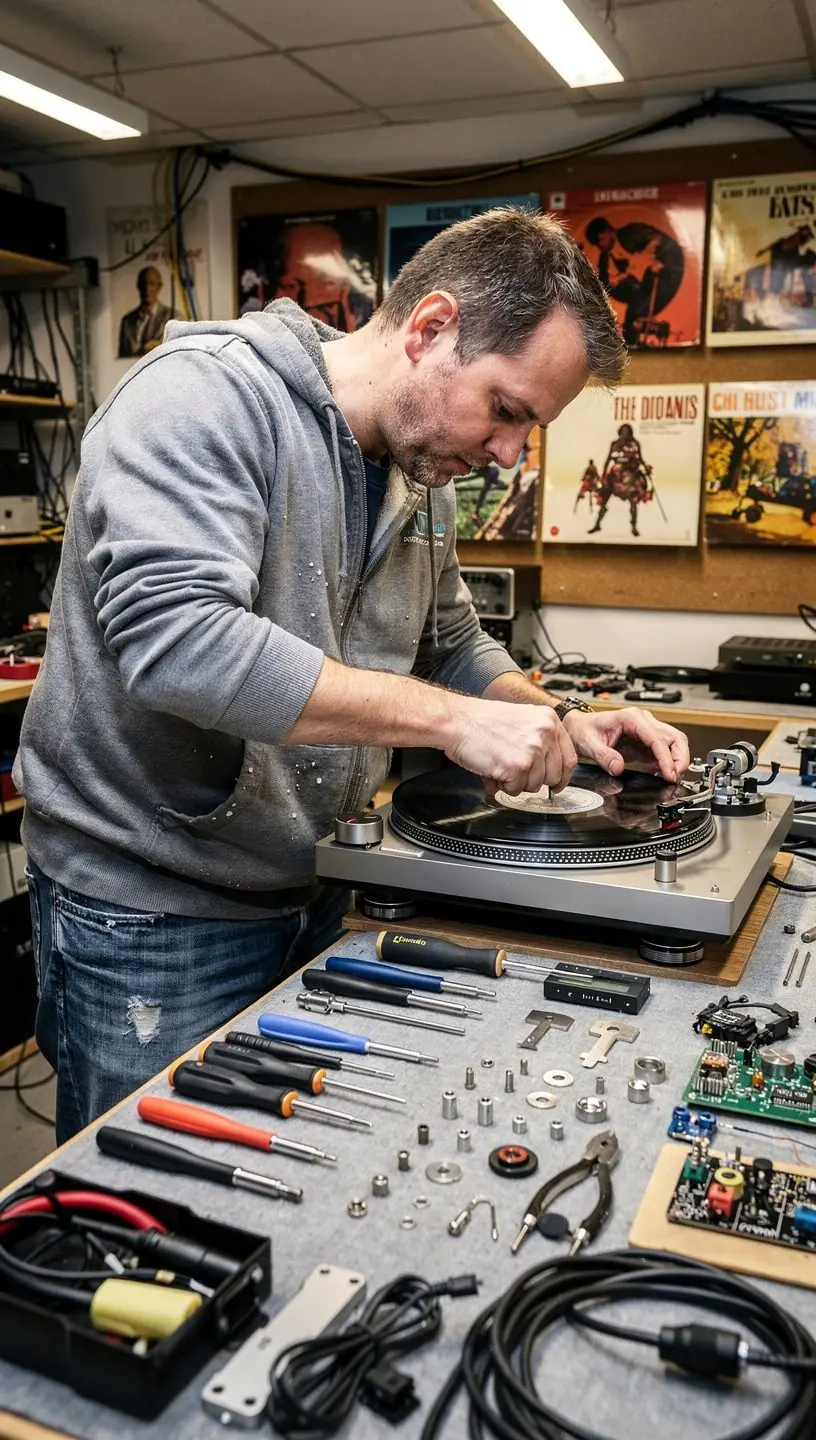
How to Optimize Turntable Setup for Best Sound
Setting up a turntable properly can significantly enhance your listening experience. Many users report that thoughtful adjustments to their setup can lead to notable improvements in sound quality. In this article, we will explore key considerations and practical steps to optimize your turntable for the best sound.
Understanding the Basics
To achieve the best sound from your turntable, it is essential to understand how various components interact. The vinyl playback process involves a stylus tracking the grooves of a record, which vibrates to produce sound. According to industry experts, the alignment and condition of these components can greatly influence the audio output.

"Proper setup is crucial for maximizing the performance of your turntable and preventing unnecessary wear on your records." - Industry Expert
Key Factors in Turntable Setup
- Leveling the Turntable: Ensuring your turntable is perfectly level is foundational. A tilted turntable can lead to uneven stylus pressure, resulting in distortion and uneven wear on your records. Use a spirit level to check this.
- Tracking Force: The tracking force refers to the pressure with which the stylus meets the record. Many manufacturers provide recommended tracking force settings. Using a stylus force gauge can help you set this accurately, which in most cases enhances sound clarity and reduces record damage.
- Alignment of the Cartridge: Proper cartridge alignment is vital for optimal sound. Misalignment can cause distortion and channel imbalance. Utilizing alignment tools, such as protractors, can help you achieve the correct angle, which research suggests can improve stereo imaging.
Environmental Considerations
Aside from physical adjustments, the environment in which your turntable is placed can also impact sound quality. Here are some factors to keep in mind:
- Avoid Vibrations: Turntables are sensitive to vibrations. It is recommended to place your turntable on a stable, vibration-dampening surface. Many users find that dedicated turntable stands or isolation pads can significantly reduce unwanted resonance.
- Room Acoustics: The acoustics of the room can affect playback quality. Soft furnishings can help absorb excess sound waves, while hard surfaces may reflect and distort sound. Adjusting furniture and adding rugs can often improve overall sound quality.
Regular Maintenance
To ensure your turntable continues to perform optimally, regular maintenance is essential. This includes cleaning the stylus and records, checking connections, and calibrating settings as necessary. According to studies, a well-maintained turntable can last significantly longer and deliver superior sound consistently.
Conclusion
In summary, optimizing your turntable setup involves a combination of careful adjustments and environmental considerations. By paying attention to factors such as leveling, tracking force, and cartridge alignment, you can enhance your listening experience. Remember, while these steps can lead to better sound, results may vary based on individual circumstances and equipment quality. Regular maintenance and thoughtful placement in your environment will further support sound quality over time.
Learn More